Sonoran bark scorpions exploit structural entry points as narrow as 1/16 of an inch, making standard surface sprays ineffective against established home invasions. In Maricopa County, high summer heat exceeding 105…
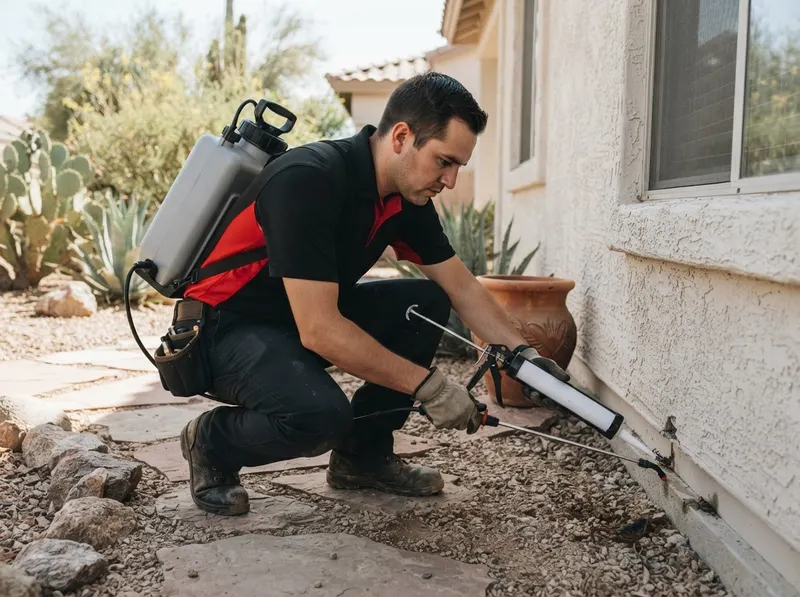
Sonoran bark scorpions exploit structural entry points as narrow as 1/16 of an inch, making standard surface sprays ineffective against established home invasions. In Maricopa County, high summer heat exceeding 105 degrees Fahrenheit causes fast degradation of standard retail pesticides, forcing scorpions into shaded weep screeds, wall voids, and irrigated foundation perimeters. Halvoro Pest Patrol applies an Integrated Pest Management protocol certified to standards set by the Pest Management Division of the Arizona Department of Agriculture. Properties bordering desert expanses near South Mountain Park and Preserve or Camelback Mountain face elevated pressure due to natural rock washes. A physical exclusion fits structures with continuous stucco weep screeds, stem walls, and pipe entries where scorpions migrate into subflooring. An exterior microencapsulated barrier fits perimeter maintenance when structural physical sealing is already intact, providing defense against transient desert arachnids without auto-renewing subscriptions.
Physical sealing targets exact structural junctions. Technicians install copper mesh and silicone sealants along exterior baseboards, wire penetrations, and door thresholds. In neighborhoods like Arcadia, Desert Ridge, and the Willo Historic District, exterior structures vary from historic crawlspace vents to modern post-tension slab foundations. A post-tension slab foundation requires weep screed ventilation inserts that allow moisture to escape while blocking arachnid passage; an older crawlspace home in North Central Phoenix requires custom vent screen mesh with openings smaller than 3 millimeters. The mechanical barrier stops movement into living rooms and bedrooms, while exterior microencapsulated polymer formulas withstand ground surface temperatures that routinely reach 140 degrees Fahrenheit on exterior concrete surfaces.
Microencapsulated barrier formulas suspend protective active ingredients inside microscopic polymer capsules. This prevents immediate breakdown from UV exposure and high thermal cycles along the base of stem walls in Norterra and Ahwatukee Foothills. Scorpions picking up these polymer shells transfer the material directly to their cuticle during nocturnal hunts for crickets and roaches. The trade-off is time versus permanence: an exterior liquid barrier requires reapplication every 60 to 90 days during peak Sonoran heat cycles, whereas full structural exclusion requires a higher upfront mechanical investment but permanently shuts down foundational voids against incoming pests.
Every job gets a firm, written price after a free on-site visit.
Tell us about your bark scorpion exclusion and barrier treatment job in Phoenix and we'll send a clear, written quote, usually the same day.
 Halvoro Pest Patrol